24 Fun Facts About Thanksgiving: Gobble Up These Surprising Tidbits
As Thanksgiving approaches, you might be looking for some interesting tidbits to share around the dinner table. This beloved holiday is steeped in history and tradition, offering a wealth of fascinating facts that can entertain and educate your family and friends.
By exploring these 24 fun facts about Thanksgiving, you’ll gain a deeper appreciation for this cherished American holiday. From its historical roots to modern-day customs, there’s always something new to learn about Thanksgiving.
Get ready to impress your guests with your newfound knowledge and spark engaging conversations during your festive gathering.
24 Fun Facts about Thanksgiving
 1) Thanksgiving was almost a fast day.
Did you know that Thanksgiving nearly became a day of fasting instead of feasting? It’s true! In the early days of America, religious leaders often called for days of fasting and prayer during times of hardship.
When President Abraham Lincoln officially proclaimed Thanksgiving as a national holiday in 1863, he was actually urged by some to make it a day of fasting and humiliation. This suggestion came from those who believed the country needed spiritual reflection during the Civil War.
Fortunately for turkey lovers everywhere, Lincoln decided against this idea. He chose to focus on gratitude instead, establishing Thanksgiving as a day to give thanks for the blessings in our life.
Can you imagine how different your Thanksgiving traditions would be if it had become a fast day? Instead of gathering around a table filled with delicious food, you might have spent the day in quiet contemplation and prayer.
The next time you sit down to your Thanksgiving feast, you can be extra grateful that this holiday ended up celebrating abundance rather than abstinence. It’s a reminder that even in challenging times, there’s always something to be thankful for.
2) The first Thanksgiving lasted three days.
You might be surprised to learn that the first Thanksgiving celebration in 1621 wasn’t just a single-day affair. In fact, it stretched out over three whole days!
This extended celebration allowed the Pilgrims and their Native American guests plenty of time to enjoy each other’s company and share in the bountiful harvest. Can you imagine the fun they must have had?
During these three days, the attendees likely engaged in various activities. They played ball games, sang, and danced, creating a festive atmosphere that went beyond just eating.
The feast itself was quite different from what you might enjoy today. Instead of turkey and pumpkin pie, you would have found venison, wildfowl, and possibly wild turkeys on the menu.
Picture yourself at this gathering, savoring unfamiliar dishes and participating in games and dances that lasted for days. It certainly puts a new spin on your modern Thanksgiving traditions, doesn’t it?
This extended celebration set a precedent for gratitude and community that has carried through the centuries. Next time you’re enjoying your Thanksgiving meal, remember that your ancestors once stretched this holiday into a three-day extravaganza!
3) Turkey wasn’t on the menu in 1621.
 Contrary to popular belief, turkey wasn’t the star of the show at the first Thanksgiving feast. You might be surprised to learn that the menu for the First Thanksgiving in 1621 looked quite different from today’s traditional spread.
Instead of roast turkey, the Pilgrims and Wampanoag likely feasted on venison and wildfowl. These wild game meats were abundant in the New World and formed the centerpiece of their celebratory meal.
The wildfowl probably included ducks and geese. While wild turkeys existed in the area, there’s no concrete evidence they were part of the first Thanksgiving menu.
You might wonder what else they ate. Well, the First Thanksgiving likely included corn, prepared as a porridge. This was a staple food for both the Pilgrims and the Wampanoag.
It’s fascinating to think about how different their feast was from what you might serve at your Thanksgiving table today. The absence of turkey shows just how much our holiday traditions have evolved over time.
So next time you’re carving into your Thanksgiving turkey, remember that you’re enjoying a relatively modern tradition. The Pilgrims would have been more likely to pass you some venison!
4) Cranberries were used as dye.
Did you know that cranberries served a purpose beyond the dinner table? These tart berries were once prized for their vibrant color-producing abilities.
Native Americans discovered that cranberries could create a rich, reddish-brown dye. They used this natural pigment to add color to their clothing, blankets, and other textiles.
The deep red hue of cranberries comes from compounds called anthocyanins. These same compounds give the berries their antioxidant properties that we value today for health reasons.
Early European settlers learned about this use from the indigenous people. They adopted the practice and began using cranberry dye for their own fabrics and crafts.
You might be surprised to learn that cranberry dye was even used to color maps and important documents. Its rich color made it a valuable resource for artists and cartographers alike.
Next time you enjoy cranberry sauce with your Thanksgiving meal, remember that these versatile berries once adorned more than just plates. Their legacy as a natural dye is just one of the many fascinating aspects of cranberry history.
5) TV dinners originated from Thanksgiving.
You might be surprised to learn that those convenient frozen meals you pop in the microwave have a connection to Thanksgiving. The story behind TV dinners is quite fascinating.
It all started in 1953 when Swanson, a food company, found itself with a big problem. They had ordered way too many turkeys for Thanksgiving – about 260 tons extra!
A salesman named Gerry Thomas came up with a clever idea. He suggested packaging the leftover turkey with some side dishes in compartmentalized aluminum trays. This way, people could easily reheat and enjoy a full meal.
The concept was inspired by the pre-prepared foods served on airplanes. Thomas even designed the packaging to look like a TV, which was becoming increasingly popular in American homes.
These meals were marketed as “TV Brand Frozen Dinner” and sold for 98 cents each. You could choose from turkey, beef, or chicken as the main course.
The idea was an instant hit! In the first year alone, Swanson sold over 10 million TV dinners. People loved the convenience and novelty of eating while watching their favorite shows.
So next time you’re enjoying a quick frozen meal, remember its surprising connection to Thanksgiving. It’s a testament to how one creative solution to a holiday problem transformed the way many people eat today.
6) Wild turkeys can run up to 20 mph.
 You might be surprised to learn that wild turkeys are quite speedy on their feet. These birds can run at speeds of up to 25 miles per hour, which is even faster than the 20 mph mentioned in the title.
To put this into perspective, the average human can run about 8 mph. This means wild turkeys could easily outpace you in a race!
Their impressive speed helps them escape from predators in the wild. When danger approaches, turkeys can quickly dash away to safety.
While they’re known for their running abilities, wild turkeys are also capable flyers. In fact, they can fly as fast as 55 miles per hour for short distances.
Next time you see a wild turkey, remember that these birds are much quicker than they might appear. Their speed is just one of the many fascinating adaptations that help them survive in the wild.
7) Benjamin Franklin preferred the turkey over the bald eagle.
You might have heard that Benjamin Franklin wanted the turkey to be America’s national bird instead of the bald eagle. This popular belief has been circulating for years, especially around Thanksgiving.
The truth is a bit more nuanced. Franklin never actually proposed the turkey as the national symbol. This myth began to spread in American newspapers around the country’s centennial.
What Franklin did do was criticize the choice of the bald eagle. In a letter to his daughter in 1784, he expressed his disappointment with the eagle as a symbol.
He described the bald eagle as a bird of “bad moral character” that steals food from other birds. In contrast, he praised the turkey as a “much more respectable bird” and a “true original native of America.”
Franklin admired the turkey’s courage, noting that it would “not hesitate to attack a grenadier of the British Guards” who entered its yard in red coat uniform.
While Franklin appreciated the turkey’s qualities, he never formally suggested it replace the bald eagle on the Great Seal of the United States. The bald eagle had already been chosen as the national emblem by that time.
So next time you’re enjoying your Thanksgiving turkey, remember that while it didn’t become the national bird, it did earn high praise from one of America’s founding fathers.
8) The average Thanksgiving lasts 4.5 hours.
Have you ever wondered how long your Thanksgiving celebrations typically last? It turns out the average Thanksgiving gathering spans about 4.5 hours. This duration allows for ample time to enjoy all the festivities and traditions associated with the holiday.
During these 4.5 hours, you’ll likely engage in various activities. You might start by watching the Thanksgiving Day Parade on TV or preparing the final touches for your feast. The main event, of course, is the Thanksgiving dinner, which often takes center stage.
After the meal, you might find yourself settling in for some football viewing or participating in family games. There’s usually time for dessert and coffee too, as everyone relaxes and digests their hearty meal.
This 4.5-hour timeframe also provides opportunities for meaningful conversations with loved ones. You can catch up with relatives you haven’t seen in a while or share stories and laughter with close friends.
Remember, while 4.5 hours is the average, your Thanksgiving celebration might be shorter or longer. Some families extend their gatherings well into the evening, while others prefer a briefer get-together. The important thing is to make the most of the time you have with your loved ones, no matter how long it lasts.
9) There are four places in the U.S. named Turkey.
 Did you know that Turkey isn’t just the star of your Thanksgiving dinner? It’s also the name of several places across the United States.
You might be surprised to learn that four places in the U.S. are named Turkey. These turkey-themed towns add a quirky touch to the American map.
The most populous of these Turkey towns is Turkey Creek, Louisiana. With a whopping 435 residents, it’s practically a metropolis compared to its feathered namesakes!
If you’re feeling adventurous, you could plan a Turkey tour across the country. Imagine the unique photo opportunities at the “Welcome to Turkey” signs!
These towns might not be as famous as their Thanksgiving counterpart, but they certainly add some flavor to local geography. Next time you’re looking at a map, keep an eye out for these hidden Turkey gems.
Who knows? You might even consider visiting one of these Turkey towns for a truly unique Thanksgiving experience. Just don’t expect to find oversized turkeys roaming the streets!
10) Thanksgiving wasn’t an official holiday until 1863.
You might be surprised to learn that Thanksgiving wasn’t always a fixed national holiday. For many years, it was celebrated on different dates across the United States.
The tradition of giving thanks dates back to the early colonial period, but it took centuries for Thanksgiving to become an official holiday. President Abraham Lincoln proclaimed Thanksgiving as a national holiday in 1863, during the Civil War.
This proclamation came after years of campaigning by Sarah Josepha Hale, a prominent writer and editor. You may know Hale as the author of “Mary Had a Little Lamb,” but her influence extended far beyond children’s literature.
Hale persistently lobbied for Thanksgiving to become a national holiday. She wrote letters to multiple presidents and used her position as editor of a popular magazine to promote the idea.
Lincoln’s proclamation set Thanksgiving as the last Thursday of November. This date remained consistent until 1939 when President Franklin D. Roosevelt moved it up a week to extend the Christmas shopping season.
After some confusion and debate, Congress passed a law in 1941 officially establishing Thanksgiving as the fourth Thursday in November. This is the date you still celebrate today.
So next time you sit down for your Thanksgiving meal, you can appreciate the long journey it took for this day to become a national holiday.
11) The Macy’s Parade balloons weren’t always so big.
When you think of the Macy’s Thanksgiving Day Parade today, you might picture enormous character balloons floating high above the streets of New York City. But did you know these iconic balloons had much humbler beginnings?
The balloons were first introduced in 1927 when the parade was renamed from Macy’s Christmas Parade to the Thanksgiving Day Parade. At that time, they were significantly smaller than what you see today.
In those early years, the balloons were more modest in size and filled with air rather than helium. You might be surprised to learn that they were even untethered and released into the sky after the parade, with rewards offered for their return.
As technology and materials improved, the balloons gradually grew larger. Today, you can witness massive inflatable characters towering several stories high. Some fan favorites have made multiple appearances over the decades, like Mickey Mouse, who debuted in 1934, and Snoopy, who first floated down the parade route in 1968.
The 2024 parade promises to be a spectacular sight with an estimated 32 balloons and inflatables set to delight spectators. As you watch, remember the long journey these balloons have taken from their modest beginnings to become the larger-than-life characters you see today.
12) The NFL held its first Thanksgiving game in 1920.
 Did you know that the NFL’s Thanksgiving tradition is over a century old? The league’s first official Thanksgiving Day game took place in 1920, the same year the NFL was founded.
On November 25, 1920, six games were played on Thanksgiving Day. This marked the beginning of a beloved football tradition that continues to this day.
You might be surprised to learn that the teams playing back then were quite different from the ones you’re familiar with now. Some of the teams that participated in those early Thanksgiving games included the Akron Pros, Canton Bulldogs, and Decatur Staleys.
The NFL wasn’t always the powerhouse it is today. In those early years, the league was still establishing itself, and Thanksgiving games helped increase its popularity.
Today, you can enjoy multiple NFL games on Thanksgiving, featuring teams like the Detroit Lions and Dallas Cowboys, who have become synonymous with the holiday tradition.
So next time you’re watching football on Thanksgiving, remember that you’re part of a tradition that’s been around for over 100 years!
13) Black Friday wasn’t originally synonymous with shopping.
You might be surprised to learn that Black Friday wasn’t always about snagging great deals and crowded stores. The term has a much darker origin than you’d expect.
Black Friday originally referred to a financial crisis that occurred on September 24, 1869. On that day, the U.S. gold market crashed, leading to one of the darkest financial days in American history.
The name “Black Friday” was first associated with this economic disaster, not the shopping extravaganza you know today. It took nearly a century for the term to evolve into its current meaning.
You might wonder how it transformed into a shopping phenomenon. Well, it wasn’t until the 1960s that retailers began using “Black Friday” to describe the day after Thanksgiving.
The new meaning stemmed from the fact that many stores would finally turn a profit on this day, moving from the “red” (losses) into the “black” (profits) in their accounting books.
It took even longer for Black Friday to become the biggest shopping day of the year. That didn’t happen consistently until the early 2000s.
So next time you’re planning your Black Friday shopping strategy, remember its humble and somewhat gloomy beginnings. It’s quite a transformation from financial crisis to shopping bonanza!
14) The first Macy’s Parade had live animals.
You might be surprised to learn that the inaugural Macy’s Thanksgiving Day Parade in 1924 featured actual live animals! Instead of the giant balloons you’re familiar with today, the parade showcased creatures from the Central Park Zoo.
Imagine strolling down Broadway and seeing tigers, camels, and elephants ambling along! These zoo animals were the stars of the show, thrilling the thousands of spectators who lined the streets.
The parade organizers had promised an “animal circus” in their advertisements, and they certainly delivered. You can picture the excitement of children and adults alike as they watched these exotic creatures pass by.
However, as you might guess, using live animals posed some challenges. There were logistical problems and safety concerns to contend with. After all, parading wild animals through city streets isn’t exactly a walk in the park!
By 1927, the parade organizers decided to make a change. They replaced the live animals with the giant balloons that have become an iconic part of the Macy’s Thanksgiving Day Parade. Felix the Cat was one of the first inflatable characters to float down the parade route.
So next time you watch the parade, remember its wild beginnings! You’re witnessing the evolution of a beloved holiday tradition that once featured real zoo animals parading through New York City.
15) Pumpkin pie wasn’t at the first feast.
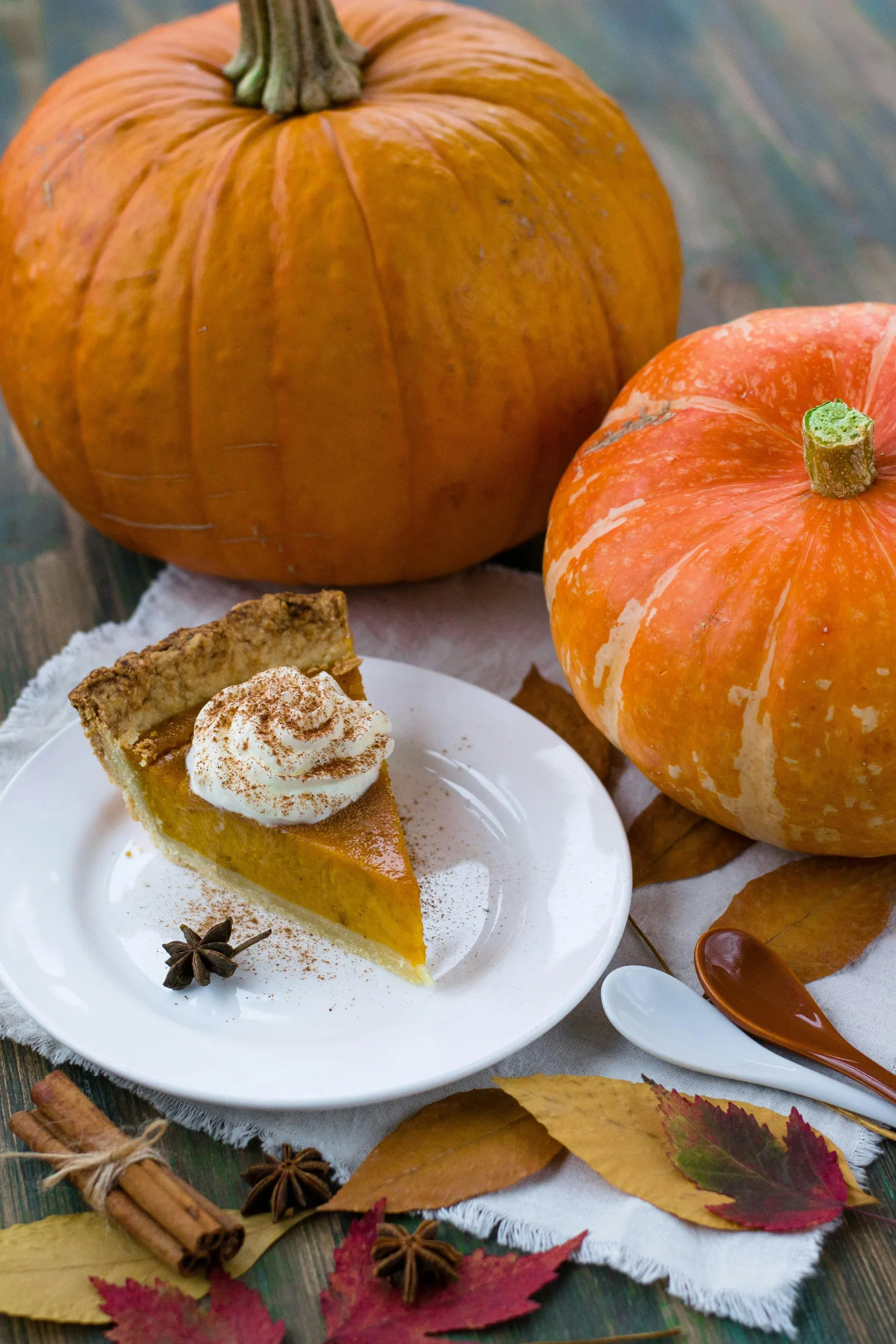 You might be surprised to learn that pumpkin pie, a staple of modern Thanksgiving dinners, was absent from the first celebration. The Pilgrims didn’t have ovens for baking at Plymouth Plantation, making it impossible to create the dessert we know today.
While pumpkins were likely present at the feast, they weren’t transformed into the sweet, spiced pie you enjoy. The settlers may have prepared pumpkin in other ways, such as stewing or roasting.
Pumpkin pie as we know it didn’t become a Thanksgiving tradition until much later. In fact, pumpkin dishes existed in various forms throughout the 17th century, but they were quite different from the modern version.
You might find it interesting that a French cookbook from 1653 suggested boiling pumpkin in milk and straining it before cooking. This method was one of the early precursors to the pumpkin pie we know and love today.
So, the next time you dig into a slice of pumpkin pie at your Thanksgiving feast, remember that you’re enjoying a relatively modern addition to the celebration. It’s a delicious example of how traditions evolve over time.
16) The original colonists and Wampanoag Indians attended the first feast.
The first Thanksgiving wasn’t just a small gathering. More than 100 people attended this historic event, including both colonists and Native Americans.
You might be surprised to learn that the Wampanoag tribe significantly outnumbered the Pilgrims. About 50 colonists were present, while approximately 90 Wampanoag men joined the celebration.
The feast lasted for three days, much longer than our modern Thanksgiving dinners. You can imagine the amount of food and preparation needed for such an extended celebration!
The menu was quite different from what you might expect at a Thanksgiving table today. Forget about turkey and pumpkin pie. Instead, the attendees enjoyed deer, corn, shellfish, and various roasted meats.
While giving thanks was certainly part of the gathering, it wasn’t all about food. The colonists and Wampanoag also engaged in ball games, singing, and dancing during the festivities.
This first Thanksgiving marked a period of peace between the colonists and the Wampanoag. It followed a peace treaty signed earlier that year, which had established an alliance between the two groups.
17) About 46 million turkeys are cooked each Thanksgiving.
You might be surprised to learn just how many turkeys end up on dinner tables across America each Thanksgiving. Around 46 million turkeys are consumed during this holiday feast.
This staggering number highlights the central role turkey plays in traditional Thanksgiving celebrations. It’s a testament to the enduring popularity of this festive bird as the centerpiece of holiday meals.
To put this figure into perspective, imagine the entire population of Spain sitting down to enjoy a Thanksgiving turkey. That’s roughly the number of turkeys prepared for this single day of celebration in the United States.
The National Turkey Federation confirms this impressive statistic. It’s clear that turkey farmers across the country are kept busy in the lead-up to Thanksgiving.
You might wonder how this tradition became so widespread. The turkey’s association with Thanksgiving dates back to early colonial times, and its popularity has only grown since then.
When you sit down to your Thanksgiving meal this year, remember that you’re part of a massive nationwide event. Your turkey is just one of millions being enjoyed in homes across America on this special day.
18) Sarah Josepha Hale lobbied for Thanksgiving as a national holiday.
Did you know that Thanksgiving wasn’t always celebrated nationwide? Before the mid-1800s, different states celebrated on various dates, and some didn’t observe it at all.
Enter Sarah Josepha Hale, a determined woman who campaigned tirelessly for a national Thanksgiving holiday. As the editor of Godey’s Lady’s Book, she used her platform to promote the idea.
For 36 years, Hale wrote editorials and letters to politicians, advocating for a unified Thanksgiving celebration. She believed it would help bring the country together, especially during the tumultuous times of the Civil War.
Her persistence paid off when she caught the attention of President Abraham Lincoln. In 1863, Lincoln finally issued a proclamation establishing Thanksgiving as a national holiday.
You might be surprised to learn that Hale was also a prolific writer. She penned the famous nursery rhyme “Mary Had a Little Lamb” and numerous other works.
Thanks to Hale’s unwavering dedication, you now celebrate Thanksgiving on the fourth Thursday of November each year. Her efforts earned her the nickname “Mother of Thanksgiving,” a fitting title for someone who helped shape this beloved American tradition.
19) The tradition of pardoning turkeys began in 1989.
 The presidential turkey pardon is a beloved Thanksgiving tradition, but its official start is more recent than you might think. While presidents had been presented with turkeys for decades, the formal pardoning ceremony began in 1989 under President George H.W. Bush.
Before 1989, turkeys given to presidents often ended up on the dinner table. However, some earlier presidents showed mercy to their feathered gifts. President John F. Kennedy informally pardoned a turkey in 1963, saying “Let’s keep him going.”
The official pardoning ceremony as you know it today started when President Bush declared that year’s turkey would be granted a “presidential pardon.” He sent the lucky bird to a farm to live out its days in peace.
Since then, the turkey pardon has become an annual White House event. Each year, you can watch as the president spares two turkeys from becoming Thanksgiving dinner. The birds receive playful names and are sent to live on farms after their moment in the spotlight.
This lighthearted tradition has captured the public’s imagination. It offers a moment of levity during the holiday season and has become a cherished part of American Thanksgiving celebrations.
Next time you tune in to watch the presidential turkey pardon, you’ll know you’re witnessing a relatively young tradition that’s quickly become a favorite holiday custom.
20) Americans eat about 50 million pumpkin pies on Thanksgiving.
You might be surprised to learn just how many pumpkin pies are consumed on Thanksgiving Day. Americans devour an astonishing 50 million pumpkin pies during this festive holiday.
That’s a whole lot of pumpkin! If you’re a fan of this classic dessert, you’re certainly not alone. Pumpkin pie has become an integral part of the Thanksgiving tradition for many families across the country.
Have you ever wondered what goes into making so many pies? The ingredients required are mind-boggling. For instance, the largest pumpkin pie ever baked used 900 pounds of pumpkin, 62 gallons of evaporated milk, and 155 dozen eggs!
While your Thanksgiving pumpkin pie probably won’t be quite that big, it’s still impressive to think about the sheer volume of pies being enjoyed nationwide. Whether you prefer homemade or store-bought, there’s no denying the popularity of this sweet and spicy treat.
Next time you’re savoring a slice of pumpkin pie on Thanksgiving, remember that you’re participating in a widespread tradition. You’re one of millions enjoying this beloved dessert on this special day.
21) The Plymouth settlers didn’t call themselves ‘Pilgrims’.
You might be surprised to learn that the early settlers of Plymouth Colony didn’t actually refer to themselves as “Pilgrims.” This term wasn’t widely used to describe them until much later.
The group that sailed on the Mayflower in 1620 called themselves Separatists. They were English Puritans who wanted to separate from the Church of England.
It wasn’t until about two centuries later that the term “Pilgrims” became popular. William Bradford, the colony’s governor, used the word once in his journal, but it didn’t catch on right away.
The nickname “Pilgrims” only became widespread in the 19th century. It gained popularity as Americans began to romanticize the early colonial period and its founders.
You might wonder why they’re called Pilgrims now. The term reflects their religious journey and quest for a new home where they could practice their faith freely.
Today, when you think of Thanksgiving, you probably picture these “Pilgrims” in their distinctive black and white outfits. But remember, they didn’t use this name for themselves during their lifetimes.
So next time you’re talking about Thanksgiving history, you can impress your friends with this little-known fact about the Plymouth settlers’ identity.
22) The average person consumes 3,000 calories on Thanksgiving dinner alone.
Thanksgiving is known for its bountiful feasts, and the calorie count certainly reflects that. You might be surprised to learn that the average American consumes about 3,000 calories during their Thanksgiving dinner.
That’s quite a hefty meal! To put it in perspective, this single dinner contains more calories than many people need in an entire day.
The traditional Thanksgiving spread is packed with delicious, but often calorie-dense foods. Turkey, stuffing, mashed potatoes, gravy, cranberry sauce, and pumpkin pie all contribute to this impressive calorie count.
Remember, this figure only accounts for the main Thanksgiving meal. If you include snacks, appetizers, or additional meals throughout the day, your total calorie intake could be even higher.
Don’t worry too much about the numbers, though. Thanksgiving is a special occasion, and it’s okay to indulge a bit. Just be mindful of your portions if you’re watching your calorie intake.
After dinner, you might consider taking a leisurely walk with family or friends. It’s a great way to aid digestion and burn off a few of those extra calories while enjoying quality time together.
23) Thanksgiving Eve is one of the biggest drinking nights of the year.
You might be surprised to learn that the night before Thanksgiving has become a major drinking occasion in the United States. This night has earned several nicknames, including “Blackout Wednesday” and “Drinksgiving.”
There are a few reasons why this night has become so popular for drinking. Most people have Thanksgiving Day off work, so they feel free to indulge the night before. College students are often home for the holiday, giving them a chance to reunite with old friends.
Many bars and restaurants see a significant increase in liquor sales on this night. It’s become one of the busiest nights for the service industry.
While it can be fun to celebrate with friends and family, it’s important to be aware of the risks. This night has unfortunately become associated with higher rates of drunk driving in some areas.
If you choose to participate in Thanksgiving Eve festivities, remember to drink responsibly. Consider designating a sober driver or using ride-sharing services to ensure everyone gets home safely.
Keep in mind that while this night has gained a reputation for drinking, there are plenty of other ways to enjoy the holiday eve. You could host a movie night, have a friendsgiving dinner, or simply relax at home in preparation for the big day.
24) Turkey wasn’t at the center of the meal until the mid-19th century.
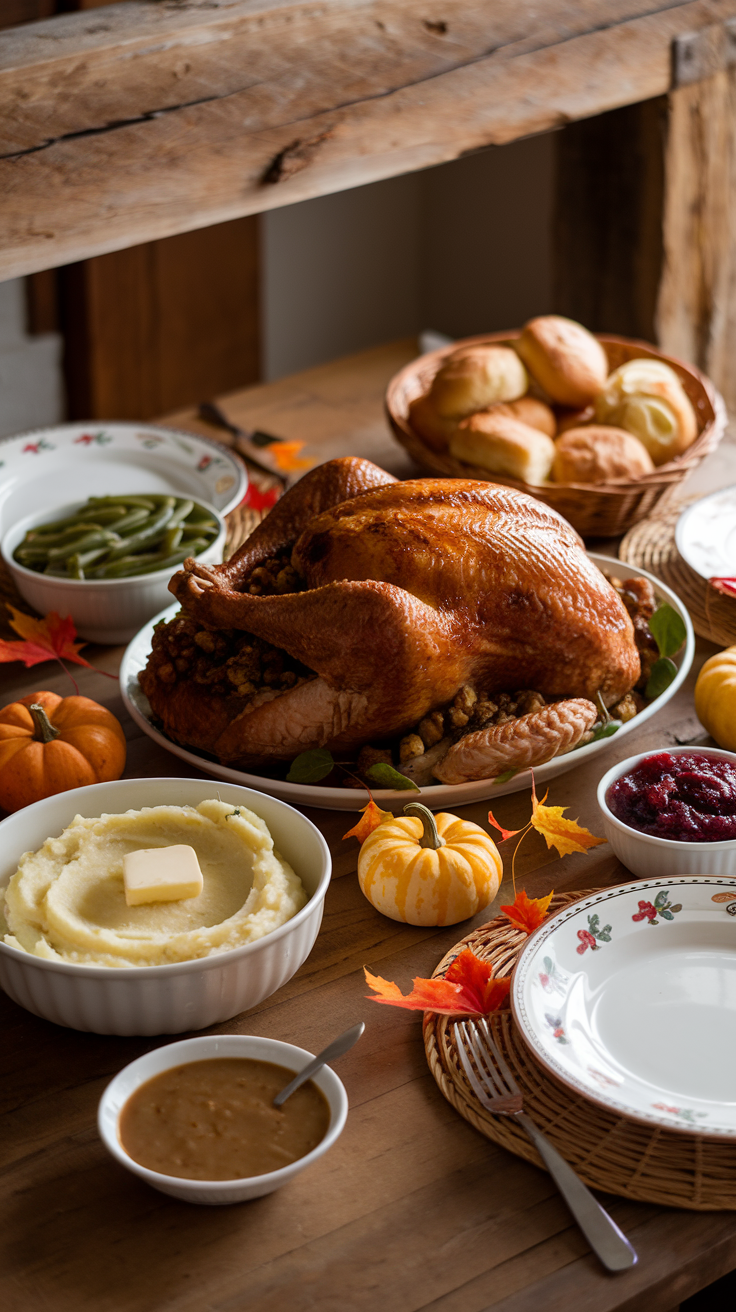 You might be surprised to learn that turkey wasn’t always the star of Thanksgiving dinner. In fact, it didn’t become the centerpiece until the mid-19th century.
At the first recorded Thanksgiving in 1621, the menu was quite different from what you’re used to today. The feast likely included venison, wild fowl, fish, and Indian corn.
It wasn’t until the 19th century that roasted turkey started to gain popularity as a Thanksgiving dish. This shift happened gradually, influenced by various factors.
One significant influence was an 1827 novel that helped popularize turkey as the main course. The book’s depiction of a Thanksgiving meal featuring turkey caught on with readers.
As Thanksgiving became more widely celebrated across the United States, turkey emerged as a unifying dish. It set Americans apart and helped create a unique culinary tradition for the holiday.
By the mid-19th century, turkey had secured its place at the center of the Thanksgiving table. Its size made it perfect for feeding large gatherings, contributing to its popularity.
Today, you probably can’t imagine Thanksgiving without turkey. But remember, this tradition is relatively recent in the holiday’s long history. Your Thanksgiving meal has evolved significantly since those early celebrations.
Historical Origins
Thanksgiving’s roots stretch back centuries, blending Indigenous harvest celebrations with European settlers’ traditions. The holiday evolved from early gatherings of gratitude to become an cherished American custom.
Indigenous Traditions
Native American tribes held harvest festivals long before European contact. These gatherings celebrated successful crops and gave thanks to nature’s bounty. You might be surprised to learn that many tribes had thanksgiving ceremonies throughout the year, not just in autumn.
The Wampanoag people, who interacted with the Pilgrims, had their own harvest celebration called Nikkomosachmiawene. This “Grand Sachem’s Council Feast” included dancing, games, and sharing food.
Pilgrim Celebrations
The event we often call the “First Thanksgiving” took place in 1621. After a harsh winter, the surviving Pilgrims and Wampanoag shared a three-day feast to celebrate a successful harvest.
Contrary to popular belief, turkey might not have been on the menu. Instead, you’d have found venison, fish, and wildfowl. The gathering likely included military drills and diplomacy between the two groups.
English harvest traditions also influenced Thanksgiving. Days of thanksgiving became more common after Henry VIII’s reign, often replacing Catholic holidays. These customs traveled with the Pilgrims to the New World, shaping the holiday you know today.
Thanksgiving in Modern Culture
Thanksgiving has evolved into a cherished holiday blending tradition with contemporary celebrations. You’ll find festive parades filling city streets and heartwarming depictions in popular media.
Parades and Celebrations
The Macy’s Thanksgiving Day Parade stands as an iconic part of modern Thanksgiving culture. Millions tune in to watch giant balloons, floats, and performances make their way through New York City.
You might also enjoy local parades in your hometown, featuring marching bands and community groups. Many cities host turkey trots – fun runs where participants often dress up in holiday-themed costumes.
Football has become synonymous with Thanksgiving. You can catch NFL games throughout the day, a tradition dating back to 1934.
Thanksgiving in Movies and TV
Hollywood has embraced Thanksgiving, giving you plenty of holiday-themed entertainment. Classic films like “Planes, Trains and Automobiles” and “Home for the Holidays” capture the chaos and warmth of family gatherings.
TV shows often feature special Thanksgiving episodes. You might remember iconic moments like the turkey-on-the-head scene from “Friends” or Charlie Brown’s poignant Thanksgiving feast.
These portrayals often highlight themes of gratitude, family dynamics, and the sometimes comical challenges of preparing the perfect meal. They reflect and shape how you experience the holiday in real life.
Global Perspectives
Thanksgiving traditions extend far beyond the United States. Many cultures around the world have their own unique ways of expressing gratitude and celebrating harvest.
Similar Holidays Around the World
Did you know that numerous countries have holidays resembling Thanksgiving? In Canada, you can enjoy their version of Thanksgiving in October, featuring similar foods like turkey and pumpkin pie.
In Germany, you might experience Erntedankfest, a harvest festival typically held in early October. This celebration often includes church services, parades, and music.
If you visit China, you could participate in the Mid-Autumn Festival, where families gather to share mooncakes and express gratitude. In Japan, you might observe Labor Thanksgiving Day, a time to honor workers and give thanks for labor rights.
In India, you could join in various harvest festivals like Pongal or Lohri, where communities come together to give thanks for bountiful crops and celebrate with traditional foods and customs.